Choosing the right scissor lift isn’t just about price and brand. You need a clear way to make smart decisions. This guide gives you a step-by-step framework to pick the perfect scissor lift for your needs.
Understanding the Decision Framework
Our five-step process helps you make confident choices:
Needs Analysis → Environment → Technical Screening → Cost Analysis → Risk Assessment → Final Decision
      ↓              ↓               ↓                  ↓                   ↓              ↓
  What you need   Where you'll use it  What works   What it costs   What could go wrong  Best choice
This framework ensures you don’t miss important factors and can compare options fairly.
Step 1: Define Your Needs
What Jobs Will You Do?
Common Tasks
- Equipment Maintenance: Changing lights, fixing HVAC, repairing pipes
- Construction Work: Installing fixtures, painting, building repairs
- Warehouse Operations: Stocking shelves, managing inventory
- Event Setup: Building stages, setting up lights and sound
- Emergency Response: Fire department support, rescue operations
Key Questions to Answer
| What to Ask | Why It Matters | What to Check |
|---|---|---|
| Maximum height needed | Determines lift height | Distance from ground to work point + 6 feet |
| Horizontal reach | Extension deck need | Will work extend beyond platform? |
| Weight capacity | Safety and performance | People + tools + materials total |
| Workspace size | Fit and maneuverability | Aisle width, turning space |
| Daily use time | Battery requirements | Hours per day affects power choice |
| Move frequency | Mobility needs | How often will you reposition? |
Real-World Scenarios
Scenario A: Indoor Warehouse Maintenance
Typical Needs:
- Working height: 20-33 feet (6-10 meters)
- Load: 2-3 workers + tools
- Floor: Concrete or epoxy
- Environment: Clean, dry indoor space
- Frequency: 2-3 times per week
Recommended Setup:
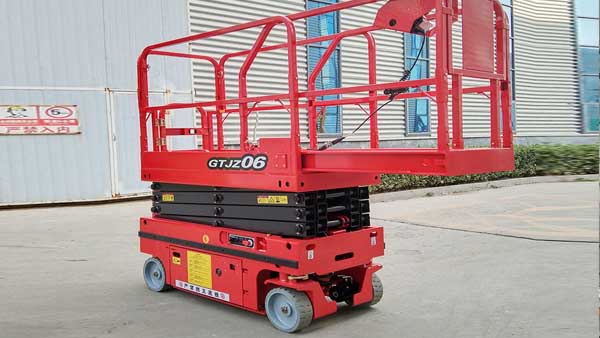
→ Electric scissor lift
→ Compact design
→ Non-marking tires
→ Standard platform capacity
Scenario B: Outdoor Construction
Typical Needs:
- Working height: 26-40 feet (8-12 meters)
- Load: 2-3 workers + building materials
- Ground: Uneven, possibly muddy
- Environment: Outdoor, weather exposure
- Frequency: Daily use
Recommended Setup:
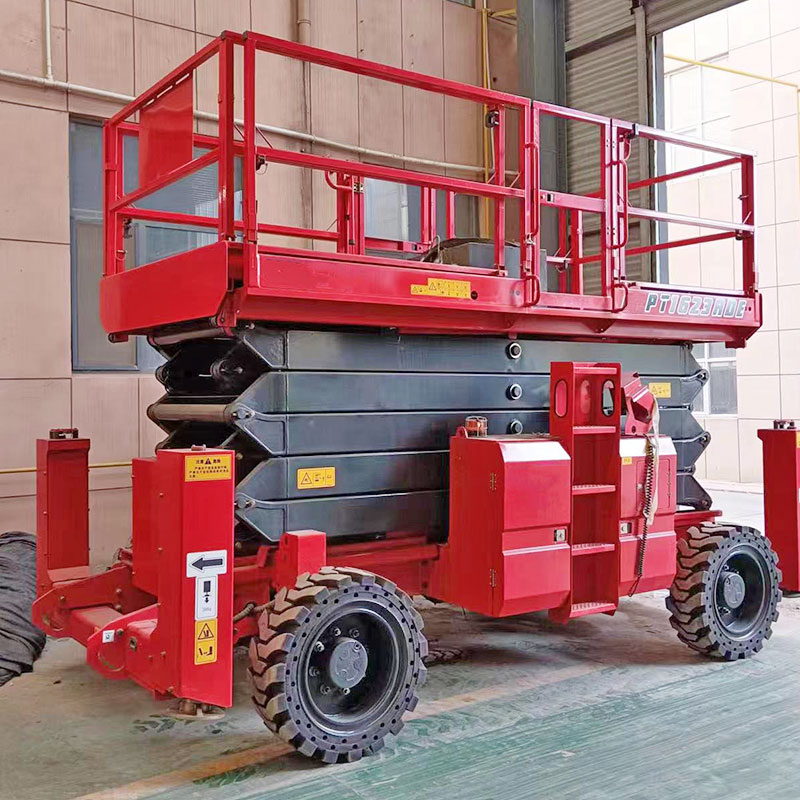
→ Rough terrain scissor lift
→ 4-wheel drive with differential lock
→ Diesel or dual-power
→ Larger platform, heavy-duty capacity
Scenario C: Shopping Mall Renovation
Typical Needs:
- Working height: 13-26 feet (4-8 meters)
- Load: 2 workers + renovation materials
- Floor: Tile or marble (needs protection)
- Environment: Indoor, crowded with people
- Frequency: Continuous during project
Recommended Setup:
→ Electric, compact model
→ Zero emissions
→ Low-noise operation
→ Narrow width (fits through doorways)
Step 2: Assess Your Environment
Ground Conditions
| Ground Type | Characteristics | Recommended Tire Type |
|---|---|---|
| Concrete/Asphalt | Good, standard conditions | Standard rubber tires |
| Tile/Marble | Floor protection needed | Non-marking tires |
| Rough Terrain | Needs traction | All-terrain pneumatic tires |
| Mud/Sand | Harsh conditions | Deep-tread off-road tires + 4WD |
Space Requirements
Aisle Width Guide:
- Less than 5 feet (<1.5m) → Need narrow model or VRC
- 5-6.5 feet (1.5-2m) → Standard compact model
- More than 6.5 feet (>2m) → Standard model works fine
Door Height:
- Less than 6.5 feet (<2m) → Need foldable guardrails
- 6.5-7.5 feet (2-2.3m) → Standard model (check carefully)
- More than 7.5 feet (>2.3m) → Most models will fit
Environmental Factors
- Indoor vs. Outdoor: Determines power type (electric vs. fuel)
- Ventilation: Indoor needs electric; outdoor allows fuel options
- Temperature: Extreme temps need special features
- Humidity/Corrosion: Coastal areas need corrosion protection
- Hazardous Areas: Chemical plants need explosion-proof certification
Regulatory Requirements
Mandatory Requirements
- Certified operators only
- Equipment must have certification and test reports
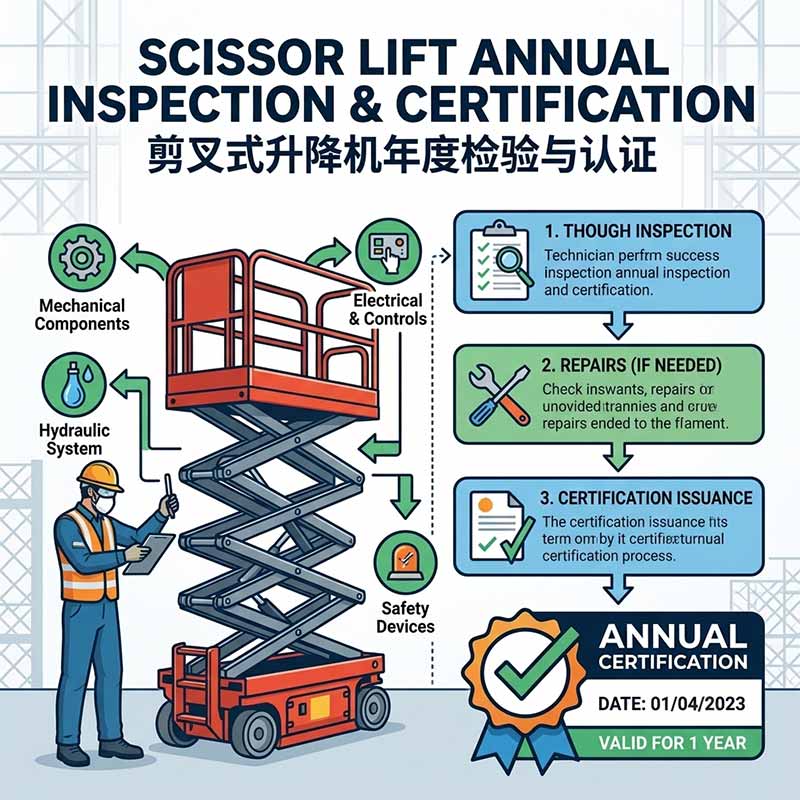
- Annual inspections required by law
- Insurance coverage needed
Industry Standards
- ANSI A92.20 (USA)
- EN 280 (Europe)
- CSA B354.1 (Canada)
- AS 1418.10 (Australia)
Step 3: Screen Technical Options
Height Selection Guide
Your Height Needs
    │
    ├─ Less than 20 feet (<6m)
    │   └─ Recommended: 19-foot class (19-foot model)
    │
    ├─ 20-26 feet (6-8m)
    │   └─ Recommended: 26-foot class (26-foot model)
    │
    ├─ 26-33 feet (8-10m)
    │   └─ Recommended: 32-foot class (32-foot model)
    │
    └─ More than 33 feet (>10m)
        └─ Recommended: 40-foot class or boom lift
Power System Comparison
| Power Type | Pros | Cons | Best For |
|---|---|---|---|
| Electric (Lead-Acid) | No emissions, low noise, low operating cost | Limited run time, long charging | Indoor use, less than 4 hours/day |
| Electric (Lithium-Ion) | Fast charging, long life, no memory effect | Higher upfront cost | High-frequency use, quick turnaround |
| Diesel | Strong power, long runtime, no charging limits | Emissions, noise, not for indoors | Outdoor, continuous work |
| Dual Power | Maximum flexibility | Highest cost, complex maintenance | Mixed indoor/outdoor use |
Operating Cost Comparison (Per Hour)
Electric: $0.75 - $1.50 (electricity)
Diesel: $3.75 - $6.00 (fuel)
Propane: $2.25 - $3.75 (gas)
Annual cost difference (4 hours/day, 250 days/year):
Electric vs. Diesel: Save $3,000 - $4,500 per year
Platform Configuration
Must-Have Features
- ✅ Extension deck (increases work range)
- ✅ Poxy protection (safety requirement)
- ✅ Emergency lowering system
Recommended Options
- ⭐ Remote controls (boosts efficiency)
- ⭐ Tool tray (adds convenience)
- ⭐ Air/hydraulic connections (for tools)
Optional Add-Ons
- 🔧 Non-marking tires (protects floors)
- 🔧 Extended guardrails (special situations)
- 🔧 Custom platform size (unique needs)
Step 4: Analyze Costs
Total Cost of Ownership (TCO)
TCO = Purchase Cost + Operating Cost + Maintenance Cost - Resale Value
Purchase Cost = Equipment price + delivery + taxes + training
Operating Cost = Energy + operator wages + insurance
Maintenance Cost = Regular service + repairs + inspections
Resale Value = Equipment trade-in or sale price
Cost Comparison Example
Scenario: 4 hours daily use, 250 work days per year
| Cost Item | Electric (New) | Diesel (New) | Electric (Used) |
|---|---|---|---|
| Purchase Price | $7,500 | $9,000 | $3,750 |
| Annual Energy | $450 | $3,750 | $450 |
| Annual Maintenance | $600 | $750 | $900 |
| 5-Year Total Cost | $10,650 | $28,500 | $8,850 |
| Daily Cost | $8.50 | $22.50 | $7.00 |
Conclusion: Electric models save money for high-frequency use.
Rent vs. Buy Decision
Buy When It Makes Sense
- ✅ Usage more than 60% of work time
- ✅ Long-term projects (over 1 year)
- ✅ Need custom features
- ✅ Have budget, want to build assets
Rent When It Makes Sense
- ✅ Usage less than 30% of work time
- ✅ Short-term projects (less than 6 months)
- ✅ Don’t want maintenance responsibility
- ✅ Want to try different models
Break-Even Point Calculation
Daily rental cost: $30
Annual rental cost: $30 × 250 days = $7,500
Purchase cost: $7,500
Annual operating cost: $1,050
Break-even point:
$7,500 ÷ ($7,500 - $1,050) = 1.16 years
→ If using more than 1.16 years, buying costs less
Step 5: Consider Risks
Technical Risks
Under-Specification Risks
- ❌ Not enough height: Can’t complete jobs
- ❌ Not enough capacity: Overloading creates danger
- ❌ Platform too small: Work becomes inefficient
Solutions: → Add 15-20% safety margin → Plan for future needs → Choose expandable options
Over-Specification Risks
- ❌ Wasted investment
- ❌ Low equipment utilization
- ❌ Higher maintenance costs
Solutions: → Accurate needs assessment → Avoid “bigger is better” thinking → Consider rental for peak demand
Supplier Risks
Risk Indicators
- Supplier leaves the market
- Parts supply interrupted
- Technical support unavailable
- Warranty claim difficulties
Risk Assessment Method
Brand Market Position:
✅ Market share > 10% → Low risk
⚠️ Market share 5-10% → Medium risk
❌ Market share < 5% → High risk
Local Service Capability:
✅ Multiple service centers → Low risk
⚠️ Single service point → Medium risk
❌ No local service → High risk
Compliance Risks
Safety Compliance Checklist
- Equipment has certification and test reports
- Meets ANSI/EN/CSA standards
- Passes annual inspections
- Operators are certified
- Has operating procedures and emergency plans
Non-Compliance Consequences
- Equipment shutdown, project delays
- Fines and legal liability
- Insurance claim denial
- Accident liability
Decision Scoring Tool
Scoring Matrix
Rate each model (1-5 points) across key categories. Highest score wins:
| Evaluation Area | Weight | Model A | Model B | Model C |
|---|---|---|---|---|
| Technical Fit | 30% | |||
| ├─ Height match | 10% | |||
| ├─ Capacity fit | 10% | |||
| └─ Environment adaptability | 10% | |||
| Economics | 25% | |||
| ├─ Purchase price | 10% | |||
| ├─ Operating cost | 10% | |||
| └─ Resale value | 5% | |||
| Brand Reliability | 20% | |||
| ├─ Market reputation | 10% | |||
| └─ Service quality | 10% | |||
| Safety | 15% | |||
| ├─ Safety features | 10% | |||
| └─ Compliance certification | 5% | |||
| Delivery Capability | 10% | |||
| ├─ Delivery time | 5% | |||
| └─ Training support | 5% | |||
| TOTAL | 100% |
Quick Decision Checklist
Technical Fit
- Working height meets needs (with margin)
- Capacity sufficient (with margin)
- Environment compatibility
- Space constraints satisfied
Economic Sense
- Within budget
- TCO acceptable
- Clear return on investment
Risk Managed
- Brand reliable
- Service guaranteed
- Compliance assured
Right Timing
- Delivery meets project needs
- Training schedule feasible
- Funding available
✅ All pass → Ready to decide ⚠️ Concerns exist → Need more research
Common Selection Mistakes
Mistake #1: Over-Specification
Scenario: Warehouse shelf stocking Chosen: 40-foot diesel scissor lift Problems:
- Wasted height (only need 26 feet)
- Diesel can’t work indoors
- Higher purchase cost than needed
Better Choice: 26-foot electric scissor lift
Mistake #2: Under-Specification
Scenario: Building exterior wall work Chosen: 19-foot standard scissor lift Problems:
- Not enough height
- Can’t handle rough terrain
- Capacity too low for building materials
Better Choice: 32-foot rough terrain scissor lift
Mistake #3: Ignoring Environment
Scenario: Luxury hotel lobby maintenance Chosen: Standard rubber tire scissor lift Problems:
- Damages marble floors
- Noise disturbs guests
- Can’t fit in elevator
Better Choice:
- Non-marking tires
- Low-noise design
- Compact or foldable model
Decision Process Timeline
1. Information Gathering (1 week)
✓ Define needs
✓ Assess environment
✓ Research market
2. Option Screening (1 week)
✓ Technical match
✓ Initial quotes
✓ Narrow to 2-3 options
3. Deep Evaluation (1 week)
✓ On-site demo
✓ Site visits
✓ Detailed comparison
4. Decision & Approval (3 days)
✓ Scoring matrix
✓ Risk assessment
✓ Internal approval
5. Contract Signing (3 days)
✓ Technical specs
✓ Business terms
✓ Delivery schedule
Summary
Choosing the right scissor lift requires:
- Systematic Analysis – Use our decision framework
- Needs-Driven – Start with actual requirements
- Comprehensive Evaluation – Technical, economic, and risk factors
- Rational Decisions – Use scoring tools, avoid guesswork
- Expert Advice – Get help when uncertain
Key Principles:
- ✅ The right fit is best, not the biggest
- ✅ Safety always comes first
- ✅ Total cost matters more than purchase price
- ✅ After-sales service counts
Next Steps:
Contact us for expert guidance