Before investing in a scissor lift, understanding market prices, brand differences, and key selection criteria is crucial. This comprehensive guide will help you make an informed purchasing decision for your aerial work platform needs.
Scissor Lift Price Range Analysis
Scissor lift prices vary significantly based on multiple factors. Understanding these factors will help you create a realistic budget for your investment. (The prices shown in the table below serve as a reference benchmark for self-propelled lifting platforms.)
| Working Height | New Equipment Price (USD) | Used Equipment Price | Ideal Applications |
|---|---|---|---|
| 10-19 ft (3-6 m) | $5,400 – $7,500 | $1,500 – $3,800 | Warehouse maintenance, indoor work |
| 20-26 ft (6-8 m) | $6,800 – $8,000 | $1,700 – $4,800 | Commercial maintenance, construction |
| 30-40 ft (9-12 m) | $7,600 – $9,000 | $2,900 – $5,900 | High-access work, large facilities |
| 40+ ft (12 m+) | $8,500 – $12,000+ | $4,500 – $7,500 | Specialized industrial applications |
Key Price-Influencing Factors
1. Working Height & Platform Size
- Every 3-5 ft increase adds 8%-30% to price
- Larger platform dimensions increase cost proportionally
2. Power Source
- Electric (Battery): $5,400 – $12,000
- Diesel/Hydraulic: $39,000 – $45,000
- Dual Power: $55,000 – $65,000
3. Load Capacity
- Standard capacity (500-700 lbs): Base price
- Heavy-duty (1000+ lbs): +20-35% premium
4. Brand Premium
- Tier-1 brands: 15-30% price premium
- Better resale value and service support
Top Brand Comparison & Recommendations
Global Leading Brands
| Item | Genie | JLG | Skyjack |
| Market Position | Global leader | Premium professional market | Mid-to-high end |
| Price Position | Mid-to-high end | High end | Mid-upper range |
| Advantages | Complete product line, high reliability, excellent resale value | Technical innovation, superior performance, exceptional durability | Excellent value, simple maintenance, high parts commonality |
| Popular Models | GS-1930, GS-2632, GS-3246 | 1930ES, 2630ES, 3246ES | SJIII 3219, SJIII 3226 |
| Best For | Businesses with adequate budget seeking quality | Heavy-duty use, harsh environment applications | Cost-conscious businesses with in-house maintenance team |
Value-Oriented Brands
Quality Domestic Brands
- Price Advantage: 30-50% lower than imported brands
- Technology Level: Rapidly improving, approaching international standards
- Best For: Budget-limited
- Caution: Choose manufacturers with proper qualifications and service networks
Key Selection Criteria
1. Define Usage Requirements
Operating Environment
- Indoor Use → Choose electric scissor lift (zero emissions, low noise)
- Outdoor Use → Consider diesel or dual-power models
- Rough Terrain → Select all-terrain scissor lift (off-road tires, 4WD)
Working Height
- Actual working height = Platform height + 6 ft (operator height)
- Recommend 10-15% safety margin
Usage Frequency
- Daily Use → Industrial-grade, heavy-duty models
- Weekly Use → Standard commercial grade sufficient
- Occasional Use → Consider rental or economic models
2. Key Technical Parameters
| Parameter | Description | Selection Advice |
|---|---|---|
| Working Height | Maximum platform elevation | Choose based on actual needs, avoid over-specification |
| Platform Capacity | Maximum load weight | Include personnel + tools + materials, add 20% margin |
| Platform Size | Working area | Consider operational space and material handling needs |
| Extension Deck | Additional outreach | Improves operational flexibility, recommended option |
| Turning Radius | Maneuverability | Critical for narrow spaces |
| Poxy Protection | Safety feature | Essential requirement, prevents ground collapse risk |
3. Safety Configuration Checklist
✅ Must-Have Safety Features
- Poxy protection system
- Emergency stop button
- Tilt alarm
- Overload protection
- Platform guardrails (minimum 1.1m height)
- Emergency lowering system
✅ Recommended Options
- Secondary stop controls
- Automatic leveling system
- Anti-collision sensors
- Personnel detection system
4. After-Sales Service Considerations
Local Service Capability
- Prioritize brands with local service networks
- Confirm response time (recommend within 24 hours)
- Understand parts availability
Warranty Policy
- Standard warranty: 1-2 years
- Extended warranty: Worth the investment
- Understand warranty coverage and exclusions
Training Support
- Is operator training included?
- Are technical documents complete?
- Are online resources available?
Budget Planning Recommendations
Total Cost of Ownership (TCO) Analysis
Purchase price is just the tip of the iceberg. A complete budget should include:
Initial Costs
- Equipment purchase price
- Delivery/shipping fees
- Necessary accessories (charger, tools, etc.)
Annual Operating Costs
- Maintenance: 5-8% of purchase price annually
- Energy costs: Electric ~$1-2/hour
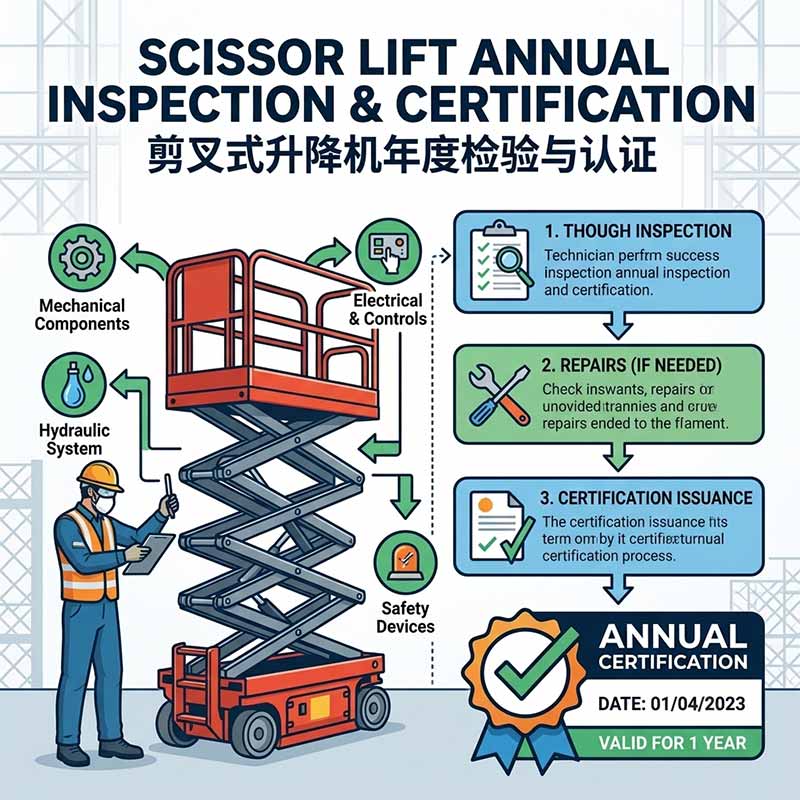
- Inspection/certification: $150-500 annually
Depreciation Considerations
- Service life: 8-12 years (proper maintenance)
- Annual depreciation rate: 8-12%
- Residual value after 5 years: 40-60% of purchase price
Budget Allocation Recommendations
Equipment Procurement: 100%
├─ Main Unit: 85-90%
├─ Essential Accessories: 5-8%
├─ Shipping & Installation: 2-3%
First-Year Total Budget = Equipment Price × 115%
Purchase Channels & Acceptance Standards
Purchase Channel Options
Direct from Manufacturer
- Advantages: Best pricing, direct technical support
- Best For: Large volume purchases, custom requirements
Authorized Dealers
- Advantages: Local service, fast response
- Best For: Most businesses, prioritize after-sales support
Rent-to-Own
- Advantages: Try before buy, rent credits toward purchase
- Best For: Uncertain needs, budget spreading
Equipment Acceptance Checklist
Visual Inspection
- No collision damage, rust, or corrosion
- Paint complete, markings clear
- Tires in good condition, no cracks
Functional Testing
- Smooth lifting, no unusual noises
- Extension platform functions properly
- All safety devices operational
- Control system responsive
Documentation Verification
- Product certificate
- Operation manual (English/local language)
- Maintenance records
- Warranty card
- Invoice and contract
Trial Run Requirements
- No-load operation: 3 full cycles
- Rated load: 2 full cycles
- Extension platform: Function test
Common Buying Mistakes
❌ Mistake 1: Focusing Only on Price
- Correct: Comprehensive evaluation of brand, service, and resale value
❌ Mistake 2: Over-Specification
- Correct: Choose based on actual needs, avoid waste
❌ Mistake 3: Ignoring Safety Features
- Correct: Safety features non-negotiable, compliance essential
❌ Mistake 4: Neglecting After-Sales Service
- Correct: Prioritize brands with local service capabilities
❌ Mistake 5: Assuming New is Always Better Than Used
- Correct: Evaluate usage frequency—sometimes used equipment makes economic sense
Purchase Decision Process
1. Needs Assessment (1-2 days)
   ↓
2. Market Research (3-5 days)
   ↓
3. Budget Approval (2-3 days)
   ↓
4. Supplier Selection (3-5 days)
   ↓
5. Proposal Comparison (2-3 days)
   ↓
6. Site Visit (1-2 days)
   ↓
7. Negotiation & Contract (2-3 days)
   ↓
8. Equipment Acceptance (1 day)
   ↓
9. Training & Handover (1-2 days)
Summary
Purchasing a scissor lift is a significant investment requiring comprehensive consideration of:
- Define Needs – Height, capacity, environment, frequency
- Realistic Budget – Consider total cost of ownership, not just purchase price
- Brand Selection – Balance price, quality, and service
- Safety First – Non-negotiable basic requirement
- After-Sales Support – Local service capability matters
Before purchasing, we recommend:
- Compare at least 3 brands
- Inspect equipment in person
- Request trial operation
- Verify service capabilities
Contact us for professional consultation and customized solutions for your aerial work platform needs.